
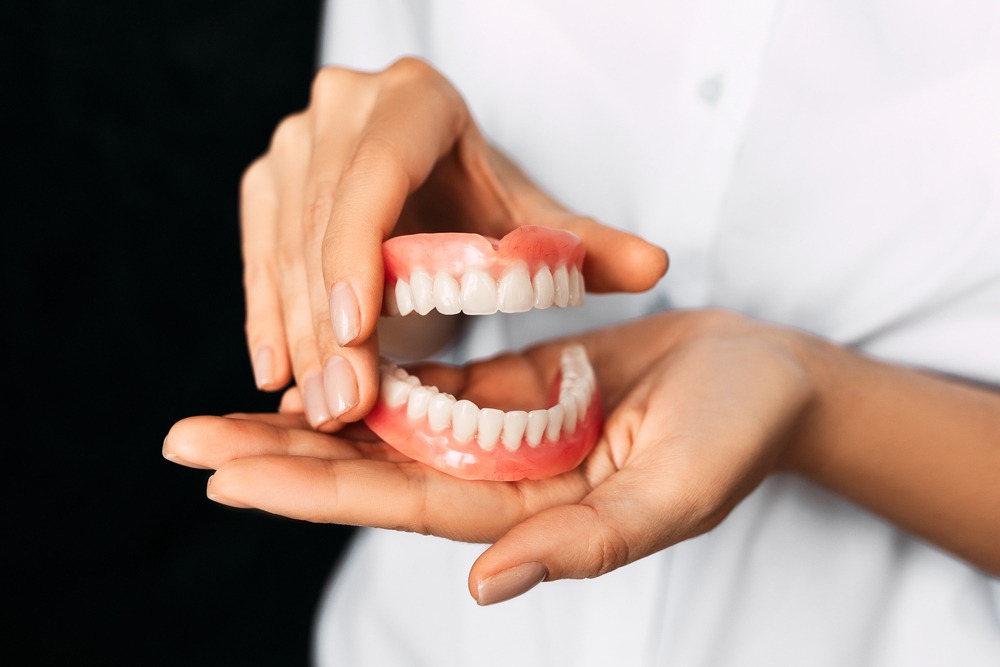
Missing a tooth, or a few, can throw off more than just your smile. It changes how you chew, how you talk, even how confident you feel showing teeth in photos. The good news is you've got options: Partial dentures, full dentures, and implant dentures all replace missing teeth, but they go about it in very different ways. If you live around River Heights or Tuxedo and you're trying to figure out which option fits your situation, keep reading to learn what you need to know before you sit down with your dentist.
Losing one or more teeth, whether from gum disease, decay, or an injury, affects more than your smile. It can change what you can eat, how you speak, and even your facial structure over time. Each type of denture suits a different combination of missing teeth, remaining natural teeth, and bone structure.
Partial dentures, sometimes called removable partial dentures, are designed for people who still have a few good teeth. These partial dentures fill in the gaps left by one or more missing teeth while relying on your remaining teeth for support. A lower partial denture, for example, typically uses metal clasps that hook onto adjacent teeth or neighbouring teeth to stay in place.
Because partials are removable, you take them out at night and clean them separately, much like a retainer. They're often a more budget-friendly tooth replacement option for patients who don't need a full arch replaced.
Full dentures (also called complete dentures) are designed to replace an entire arch of teeth, whether that's the upper jaw, lower jaw, or both. They're typically recommended when most or all of your natural teeth in an arch are missing or beyond saving.
Like partials, full dentures are removable appliances. They rest directly on your gums and are kept in place by suction, adhesive, or a combination of both. Many patients who have lost teeth to advanced gum disease or significant bone loss end up considering full dentures as their tooth replacement solution.
Implant dentures, also known as implant-supported dentures, take a different approach entirely. Instead of resting on the gums, they're anchored to titanium or zirconia posts that are surgically placed into the jawbone. Over a healing period, these posts fuse with the bone in a process called osseointegration, giving the denture a stable, secure foundation.
Implant-supported dentures can replace several teeth, an entire arch, or even support a fixed bridge, depending on your needs and how much bone is available. Because implants integrate with the jawbone, they also help with bone preservation, something removable dentures can't do on their own.
Partial dentures are a practical option when you still have several healthy teeth left. They:
For patients who aren't good candidates for implant surgery, whether due to medical conditions or personal preference, partials remain a reliable, lower-cost way to restore chewing function and appearance.
Full dentures work well for patients who have lost most or all of their natural teeth in an arch. They:
For many patients, full dentures offer a faster path back to a functional smile without the recovery time that comes with surgery.
Implant dentures tend to come up most often when patients want something closer to their original, natural teeth. They:
The trade-off is a longer treatment plan and a higher initial investment, but for many patients, the long-term value outweighs the upfront cost.
| Factor | Partial Dentures | Full Dentures | Implant Dentures |
| Comfort & Stability | Generally stable when remaining teeth support clasps well | Can shift or feel bulky, particularly on the lower jaw | Most stable option, secured directly to the jawbone |
| Appearance & Natural Feel | Looks natural, but metal clasps may be visible | Restores a full, natural-looking smile | Closest to natural teeth in both look and feel |
| Eating & Speaking Performance | Good, though some patients notice minor restrictions | Workable, but some patients report reduced chewing force | Strongest chewing function, closest to natural bite |
| Long-Term Oral Health Benefits | Helps prevent shifting of remaining natural teeth | Doesn't prevent jawbone loss over time | Supports bone preservation |
| Cost | Lowest initial investment | Moderate cost | Higher initial investment, though, may offer better long-term value |
| Maintenance | Removable for cleaning, requires proper care of clasps | Removable. Needs daily cleaning and occasional relining | Depends on the system. Some require removal by the dentist for semi annual cleaning, some can be removed by the patient. |
| Treatment Timeline | Typically completed in a few visits | A few visits, plus an adjustment period | Longer timeline due to implant surgery and healing period |
Partial dentures are usually recommended when you still have a good number of healthy teeth and only need to replace one or more teeth, particularly along the front teeth or side of your smile. They're also a reasonable temporary solution while you decide on a longer-term plan.
Full dentures tend to be recommended when most of the teeth in an arch are gone or failing, and there isn't enough bone or remaining tooth structure to support a partial denture. They're also common for patients who want a non-surgical option.
Implant dentures are often recommended for patients with enough healthy bone to support implant surgery and who want a more permanent, stable solution. They're particularly popular with patients who have had trouble with loose-fitting dentures before, or who want to avoid further bone loss.
If you're only missing one or more teeth and your surrounding teeth are healthy, a partial denture might be all you need. If you're missing most or all of your teeth in an arch, you're likely looking at full or implant-supported dentures instead.
Implant-supported dentures need enough bone to anchor the titanium or zirconia post securely. If you've experienced significant bone loss, your dentist may recommend bone grafting before implant surgery or suggest full or partial dentures as a more straightforward path forward.
Partial and full dentures usually cost less upfront, while implant dentures involve a larger initial investment tied to surgical placement and healing. That said, implants can offer better long-term oral health benefits, which is worth weighing against the higher starting cost.
Some patients don't mind removing a denture each night, while others want something that feels and functions like natural teeth without daily removal. If chewing function and confidence while eating in public matter a lot to you, bring that up with your dentist.
There's no shortcut around a proper dental assessment here. Your dentist needs to look at your remaining teeth, your bone structure, your overall dental health, and your goals before recommending a path forward. What works well for one patient with several missing teeth and strong jawbone health might not work at all for another patient with gum disease and significant bone loss.
Your budget matters too, and so does your day-to-day lifestyle. A good dentist won't push you toward the most expensive option by default. They'll walk you through the pros and cons of partial dentures, full dentures, and implant dentures based on what's truly happening in your mouth.
One more note: Please don't try to manage denture problems with DIY fixes or home remedies you find online. If something doesn't fit right, causes irritation, or feels off in any way, see your dentist. Trying to adjust or repair a denture yourself can cause more harm than good, and even products marketed for at-home denture care can trigger allergic reactions or injury in some patients. Talk to your dentist first.
Looking for dentures in Winnipeg? Book a free consultation with Fresh Dental today and take the first step toward a natural-looking, confident smile. We offer personalized consultations that assess your oral health, remaining natural teeth, and goals before recommending anything.
Whether you need a lower partial denture, a full set of replacement teeth, or a longer-term implant solution, our team will walk you through what to expect at every stage, from the initial assessment to the healing period and beyond. We proudly serve patients around River Heights and Tuxedo - for dentures and all other tooth-related assistance.